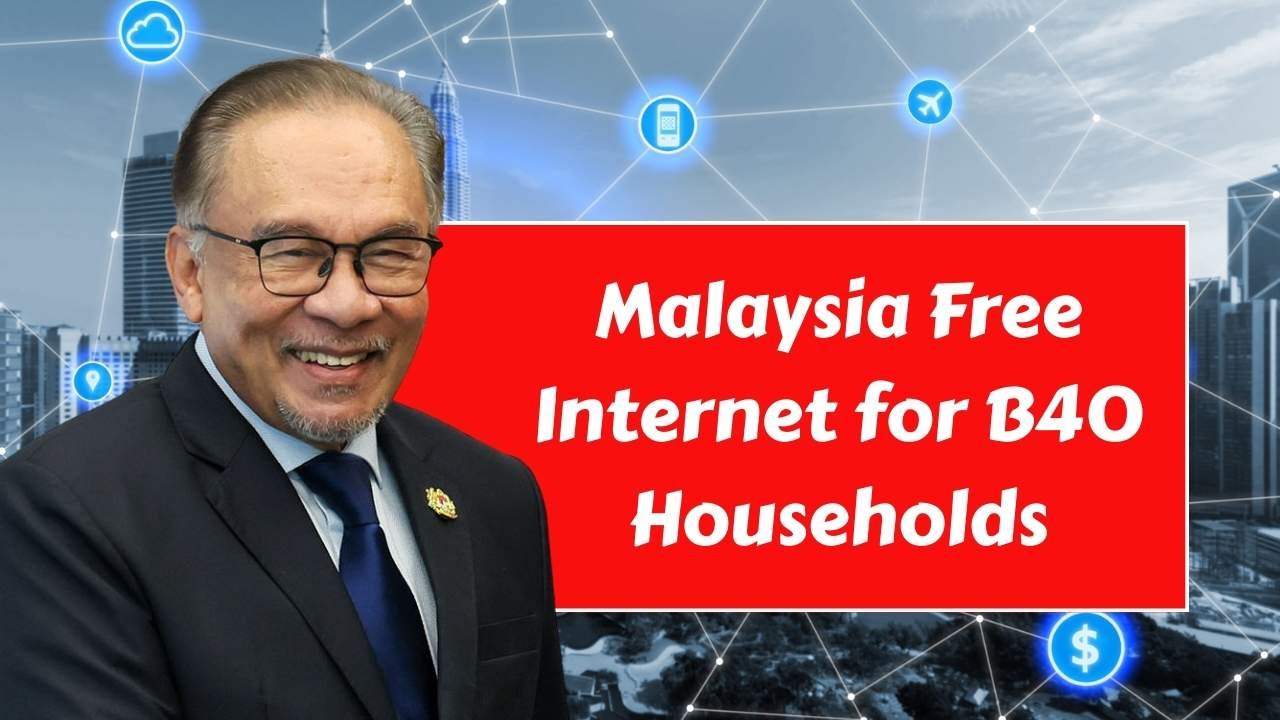

In today’s world, internet access is not a luxury but a basic necessity. It plays a vital role in education, healthcare, work, and communication. For Malaysia, ensuring that all communities can benefit from digital opportunities has been a national priority. Recognising that the B40 group, which represents the bottom 40 percent of income earners, is the most affected by digital inequality, the government has rolled out initiatives to provide free or heavily subsidised internet access. The year 2025 brings expanded programmes, more coverage areas, and easier activation steps designed to close the digital divide.
Why Free Internet Matters for B40 Families
B40 households often face financial challenges that make it difficult to afford reliable internet services. In many cases, these families live in either urban low-cost housing or rural areas where connectivity options are limited. Free internet is more than just about browsing social media; it is about giving children equal access to online learning, enabling families to apply for jobs, and helping communities connect with essential services such as healthcare and government assistance. By bridging the digital gap, Malaysia is ensuring that no citizen is left behind in the digital economy.
Overview of Free Internet Initiatives in 2025
The free internet initiatives are part of broader national programmes such as JENDELA 2.0 and state-level projects like MySRBN in Sarawak. They are also supported by partnerships with major telecommunications companies that provide discounted or free plans to B40 households.
These programmes focus on three main goals: improving infrastructure, providing free or low-cost broadband packages, and ensuring access to devices when needed. Some plans last for nine months of free service, while others provide continuous low-cost options after the free period ends. This balance helps families enjoy connectivity now and prepares them for sustainable access in the future.
Coverage Areas Under Free Internet Schemes
Not every part of Malaysia is covered equally, but the government has prioritised areas with the highest concentration of B40 households.
People’s Housing Projects (PPRs)
Residents of PPR flats across Malaysia are among the main beneficiaries. In 2025, around thirty PPR locations nationwide have been selected for free 30 Mbps broadband under the JENDELA 2.0 pilot programme. This initiative is expected to cover more than thirteen thousand housing units, benefitting over fifty thousand residents.

Rural and Remote Villages
Rural communities, especially in states like Sarawak and Sabah, are receiving free internet access through projects such as MySRBN. These programmes provide free equipment, installation, and basic data quotas for households that have never had stable internet access before. This is particularly important for longhouses and villages deep in the interior, where connectivity challenges have existed for decades.
Community Internet Centres
Across the country, community internet centres serve as hubs for free Wi-Fi. These centres allow residents who may not have personal internet connections to still access online services. Many centres have been upgraded with better speeds and wider coverage, making them essential for small businesses, students, and job seekers.
Students in B40 Families
Special provisions are made for students from low-income families. Certain telcos provide free SIM cards, data packages, and even smartphones or tablets to schoolchildren and university students. This ensures that children are not excluded from online learning opportunities simply because of financial barriers.
What the Free Internet Provides
The type of internet provided depends on the programme and location. Some households enjoy high-speed fibre broadband up to 30 Mbps, while others receive free 4G data plans through mobile networks.
In rural areas, free routers and equipment are installed so families can share Wi-Fi at home. In other cases, students receive data quotas on their mobile phones for online learning. Some programmes also include free or subsidised devices, allowing households without smartphones or laptops to get connected for the first time.
Eligibility Criteria for B40 Internet Access
To qualify for these free internet programmes, households must generally fall into the B40 category as defined by the government’s income classification. Applicants usually need to provide documentation such as their identification card, proof of income, and confirmation of residence in areas like PPR flats or rural villages.

In programmes targeted at students, priority is given to households with children attending school or university. Families already registered in government assistance databases such as Bantuan Prihatin Rakyat or Bantuan Keluarga Malaysia usually find the process easier because their income status has already been verified.
Steps to Activate Free Internet Access
The process to get connected is designed to be straightforward.
- Check if your area is included in the free internet programme. Lists of covered locations are usually published on government or telco websites.
- Confirm your eligibility as part of the B40 group. This may involve showing income documents or being listed in government aid programmes.
- Register through the designated channel, which could be online, through your housing management office, or directly with your chosen telco.
- Provide the required details such as identity card, address, and household information.
- Once approved, wait for installation if it is fixed broadband, or collect your SIM card and device if it is a mobile data plan.
- Start using your free service for the duration of the programme. After the free period ends, you may choose to continue under affordable subscription plans provided by telcos.
Challenges in Implementation
While the initiative is promising, there are still challenges. Infrastructure limitations in very remote areas mean that some villages cannot be connected immediately. There are also cases where households are unaware of their eligibility, leading to lower participation rates. Technical issues such as slow speeds or unstable connections may arise, especially in areas with high demand.
Another challenge is sustainability. Free internet is usually offered for a fixed period, such as nine months, and after that families must decide whether to switch to affordable paid plans. For some B40 households, even discounted packages can be a financial burden.
The Future of Internet Access for B40 Families
The long-term goal is not just to provide temporary free internet but to ensure that affordable, reliable connectivity is available to all Malaysians. As infrastructure improves and fibre networks expand, the cost of broadband is expected to continue decreasing. By 2025, the government aims to achieve near-universal coverage, with most areas having access to stable internet services.
Partnerships between the government, telcos, and state agencies will remain crucial. By combining subsidies, infrastructure investment, and education, Malaysia can move closer to bridging the digital divide completely.

Conclusion
Malaysia’s free internet initiative for B40 households in 2025 is a step toward digital equality. By targeting PPR residents, rural villages, students, and low-income families, the programme ensures that essential connectivity reaches those who need it most. Although challenges remain in terms of coverage, awareness, and sustainability, the progress so far shows a strong commitment to inclusivity.
For B40 families, this initiative offers more than just internet access. It opens the door to better education, job opportunities, healthcare services, and social participation. As the digital world continues to expand, ensuring that no community is left behind will be one of the most meaningful achievements of Malaysia’s development journey.